
Concrete vs steel piers Dallas homeowners consider often comes down to how each material interacts with the unique clay soil and expansive subsoils common in the area. Foundation settlement and structural damage risks escalate without the right pier choice, leading to costly repairs and compromised safety.
Concrete pressed pilings offer rigidity and resistance to corrosion but may struggle with soil shifts, while steel piers provide flexibility and deeper anchoring in unstable ground. Understanding the soil conditions and performance characteristics of both options is crucial for Dallas property owners facing foundation issues.
Professional contractors typically evaluate soil type, moisture levels, and load requirements before recommending pier solutions to prevent further damage and protect investment value.
Quick Takeaways on Concrete Pressed Pilings vs Steel Piers in Dallas Soil
- Dallas soil conditions often feature expansive clay, making steel piers effective for deep stabilization compared to concrete pressed pilings.
- Steel piers typically provide greater load-bearing capacity and can be installed with less disturbance to existing structures.
- Concrete pressed pilings may be more prone to cracking and deterioration in the variable moisture conditions common to Dallas.
- Professional contractors recommend evaluating soil composition and foundation type before choosing between these two methods.
- Cost and longevity differ; homeowners should expect steel piers to offer longer-term performance in Dallas soil environments.
Understanding Dallas Soil Conditions and Their Impact on Pier Foundations
Dallas, Texas, is known for its challenging soil conditions, which significantly influence the performance of pier foundations. The region's soil primarily consists of expansive clay soil, which undergoes considerable volume changes with variations in moisture content.
This cyclical expansion and contraction can exert substantial pressure on foundation systems, leading to settlement and structural issues if not properly addressed.
Clay soil in Dallas tends to swell during wet periods and shrink during dry spells, causing uneven movement beneath homes. This dynamic behavior necessitates foundation supports that can adapt to or resist these forces.
Both concrete pressed pilings and steel piers are engineered to counteract these movements, but their effectiveness depends on how they interact with the specific soil profile.
Professional contractors familiar with Dallas soil typically evaluate factors such as:
- Soil expansion potential: The degree to which the clay soil expands and contracts, influencing foundation stability.
- Moisture content fluctuations: Seasonal changes in groundwater levels that affect soil volume.
- Soil bearing capacity: The ability of the soil to support loads from the foundation system without excessive settlement.
Understanding these variables is crucial for selecting a foundation solution that mitigates risks such as water damage, settlement, and long-term structural degradation.
Homeowners in Dallas should expect contractors to conduct thorough soil analyses before recommending either concrete pressed pilings or steel piers, ensuring compatibility with the local clay soil and its moisture-driven behavior.

Material Properties and Durability: Concrete Pressed Pilings vs Steel Piers in Dallas
Concrete pilings and steel piers exhibit distinct material properties that influence their durability and performance in Dallas soil. Concrete pilings are known for their high compressive strength, making them effective at supporting heavy loads in expansive clay soils typical of the region.
Their dense, rigid structure resists deformation under pressure, which is crucial for maintaining foundation stability amid soil movement.
Conversely, steel piers offer superior tensile strength and flexibility, allowing them to adapt to shifting soil conditions without cracking. However, steel’s susceptibility to corrosion—especially in the moist, alkaline environment common in Dallas—necessitates protective coatings or galvanization to enhance longevity.
Professional contractors typically evaluate the corrosion resistance of steel piers carefully before recommending them for long-term use.
Durability Considerations in Dallas Soil Conditions
- Concrete pilings: Excellent resistance to chemical reactions in soil; strong against compressive forces but may develop cracks if soil shifts abruptly.
- Steel piers: High tensile strength and adaptability; require corrosion protection to prevent rusting in moist Dallas soils.
- Moisture impact: Concrete’s porosity can allow water ingress, potentially weakening the material over decades without proper sealing.
- Longevity: Both materials can provide durable foundation support when installed and maintained correctly, but soil-specific factors influence lifespan.
In summary, the choice between concrete pressed pilings and steel piers in Dallas depends heavily on their material properties relative to local soil chemistry and moisture levels. Homeowners should expect professional assessments to weigh these durability factors before installation recommendations are made.
Pro Tip
When selecting between concrete pressed pilings and steel piers for foundation support in Dallas, TX, consider the soil's moisture levels and expansive clay characteristics. Steel piers often provide superior resistance to soil shifts and can be adjusted post-installation, while concrete pilings excel in long-term durability under stable load conditions.
Consulting with professional contractors who thoroughly evaluate Dallas soil conditions ensures the optimal choice for mitigating settlement structural risks.
Cost Analysis and Installation Timelines for Concrete and Steel Piers in Dallas
Installation cost for concrete pressed pilings and steel piers in Dallas varies widely due to factors like material cost, labor, and site conditions.
Dallas contractors typically report that concrete pilings have higher material costs because of the need for specialized concrete mixes designed to withstand expansive clay and other soil challenges.
However, labor for concrete piling installation tends to be less intensive than for steel piers, which often require heavy equipment and precise driving methods.
Steel piers generally come with a higher labor cost due to the complexity of installation, including the use of hydraulic equipment to drive piers deep into stable soil layers.
Nevertheless, the material cost of steel can be lower than concrete, especially when accounting for the volume of concrete needed for pressed pilings. Dallas contractors typically balance these elements when providing estimates.
Typical Installation Timelines
Installation timelines for both systems depend on soil conditions and foundation size but usually fall within distinct ranges. Concrete pressed pilings require more curing time after placement, which can extend the overall timeline by several days.
Dallas contractors typically schedule between 3 to 7 days for concrete piling projects, factoring in site preparation and curing.
Steel pier installation, by contrast, is often faster due to the immediate load-bearing capacity once driven. Professional companies in Dallas usually complete steel pier installations within 1 to 3 days, depending on the number of piers and access constraints.
Homeowners looking for foundation repair should expect timelines reflecting these typical durations when consulting with local contractors.
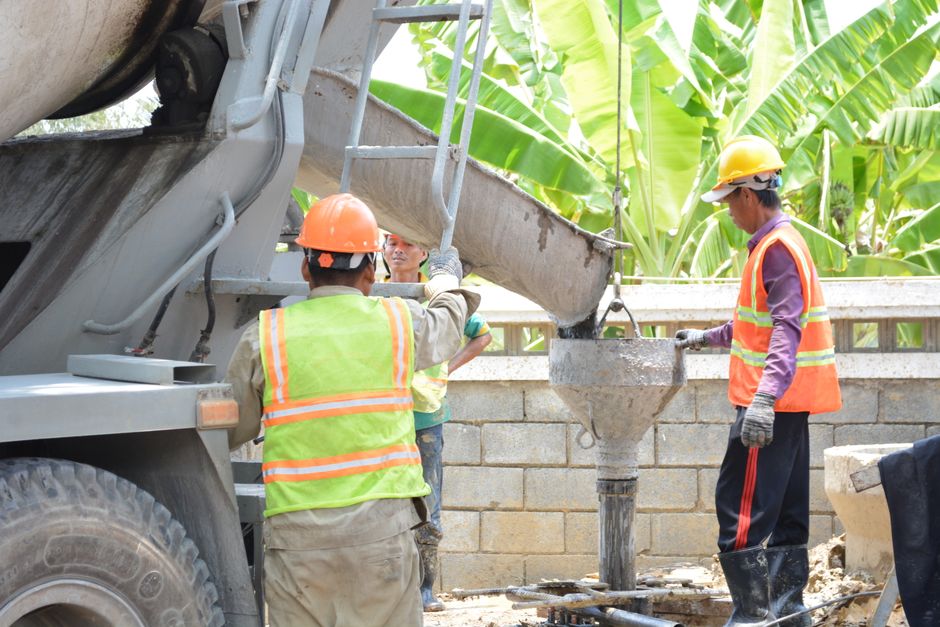
Suitability and Best Use Cases for Concrete Pressed Pilings vs Steel Piers in Dallas Homes
When addressing foundation repair in Dallas residential homes, the choice between concrete pressed pilings and steel piers largely depends on the load-bearing capacity requirements and the nature of soil movement.
Homes built on expansive clay or highly variable Dallas soil often require solutions tailored to mitigate settlement caused by moisture fluctuations and soil shifts.
Concrete pressed pilings are typically best suited for light to moderate structural loads, such as those found in smaller residential buildings or additions where deep, stable strata can be reached with pressed pilings.
Their design allows them to be installed with minimal disturbance, making them a preferred option for homes where soil conditions allow for effective load transfer without extensive excavation.
Best Use Cases for Concrete Pressed Pilings
- Lightweight residential structures or single-story homes with moderate foundation settlement issues
- Areas with stable upper soil layers that enable pressed pilings to bear loads effectively
- Projects requiring minimal site disruption, such as renovations or additions where space is limited
Best Use Cases for Steel Piers
- Heavier residential homes, including multi-story buildings that demand higher load-bearing capacity
- Sites with significant soil movement, where deep foundation support is critical to counteract expansive clay effects
- Homes experiencing severe settlement structural damage, requiring robust underpinning solutions capable of reaching bedrock or stable soil layers beyond shifting strata
Professional contractors in Dallas typically evaluate moisture levels, soil shifts, and existing foundation conditions before recommending the most suitable piling method. Understanding the specific needs of each home ensures that the selected system effectively stabilizes the foundation while accommodating Dallas's challenging soil environment.
Concrete Pressed Pilings vs Steel Piers in Dallas Soil
| Option | Pros | Cons | Best For |
|---|---|---|---|
| Concrete Pressed Pilings | Durable under expansive clay conditions, resistant to corrosion, provides strong load-bearing capacity | Longer installation time (3 to 7 days), less adaptable to rapid soil shifts, heavier equipment required | Homes with stable soil profiles, moderate settlement issues, and preference for corrosion resistance |
| Steel Piers | Faster installation (1 to 3 days), highly adjustable for ongoing soil movement, excellent strength-to-weight ratio | Susceptible to corrosion if not properly coated, potentially higher maintenance costs, less effective in extremely soft soils | Properties experiencing active soil shifts, requiring adjustable support, and where rapid foundation stabilization is needed |
| Concrete Pressed Pilings with Steel Reinforcement | Combines durability of concrete with added tensile strength, better suited for Dallas clay soils, enhanced long-term stability | Higher material costs, more complex installation process, increased weight | Homes with severe settlement problems and need for reinforced foundation support |
| Helical Steel Piers (Subset of Steel Piers) | Easier installation in difficult soil, minimal disturbance, effective in both clay and mixed soils | Limited load capacity compared to pressed pilings, potential for bending under extreme loads | Smaller residential foundations needing targeted stabilization, sites with restricted access or space constraints |
Frequently Asked Questions
What factors determine whether concrete pressed pilings or steel piers are better for Dallas soil?
Professional contractors typically evaluate soil conditions, moisture levels, and load-bearing capacity before recommending concrete pressed pilings or steel piers. The presence of expansive clay and the degree of soil shifts in Dallas are critical in this decision-making process.
How do concrete pressed pilings and steel piers differ in installation time?
Installation timelines vary, with concrete pressed pilings typically requiring 3 to 7 days, while steel piers often take 1 to 3 days. This difference is influenced by the method of installation and the extent of soil movement.
Are there specific soil conditions in Dallas that favor steel piers over concrete pilings?
Steel piers are generally preferred in areas with highly expansive clay and significant soil shifts, as they can be driven deeper to reach stable strata. Dallas soil's variability makes this a common consideration for professional contractors.
What maintenance considerations exist for concrete pressed pilings and steel piers?
Both foundation supports require monitoring for signs of settlement structural issues. However, steel piers may need periodic inspection for corrosion, while concrete pilings demand attention to potential cracking due to soil pressure changes common in Dallas.
Can homeowners expect different costs between concrete pressed pilings and steel piers in Dallas?
Costs vary based on soil conditions, depth required, and material prices. Generally, steel piers might have a higher upfront cost but offer quicker installation, whereas concrete pressed pilings could be less expensive but take longer to install due to curing times.
Choosing between concrete pressed pilings and steel piers in Dallas soil requires careful consideration of soil conditions, load-bearing capacity, and potential settlement issues. Professional contractors typically evaluate moisture levels and soil movement before recommending the best solution for a home’s foundation stability.
Homeowners seeking durable and effective foundation repair options in Dallas, TX, should consult with experienced local experts. Get matched with vetted Foundation Repair in Dallas, TX via our -matching form to connect with qualified professionals tailored to your needs.